
Mapping out your estate and assets
You don’t need a portfolio of property and a vault full of assets to make a will. If you have anything you wish to gift to friends and family, you should consider making one. So, even if your grandfather’s old watch isn’t worth much financially, it may carry sentimental value that you want to pass on.
Before you write your will, make a list of what you own, including property, cars, savings, businesses, and personal possessions. Be sure to include the value of each item. This will make it easier to divide your estate among your beneficiaries and deal with any financial matters, such as tax, that may arise.
Listing your beneficiaries (and what to gift them)
Who’s going to get what? Beneficiaries are the people or organisations who will benefit from your will, whether that’s a sum of money or your favourite salt shaker.
Once you have a clear picture of your assets, you can begin deciding who will inherit them. It’s wise to create a list of beneficiaries first, then decide how they will benefit. You do not want to spend time dividing your assets only to realise you have left your beloved Aunt Margaret off the list.
Beyond friends and family, you may also want to include charities and other organisations in your will.
Think of this as a dress rehearsal. Nothing is settled until it is formally included in your will.
Choosing your executors, trustees, guardians, and witnesses
Responsibility is key when choosing an executor, trustee, guardian, or witness.
An executor is the person you appoint to handle your estate after you die. There is a lot of responsibility involved, along with a fair amount of paperwork, so it is important to choose carefully. You can appoint up to 4 executors, but it is worth thinking ahead to avoid disagreements when managing your estate.
If you are in a relationship, it is common to appoint your partner as executor. Any children you have over the age of 18 may also be suitable choices, not least because they are likely to outlive you.
It is generally considered best practice to appoint two executors: a main executor and a back-up who can step in if your first choice is unable to act.
If your will includes a trust, you may also want to appoint a trustee to manage the estate for a named beneficiary. This can be the same person as your executor, or another responsible adult.
If you have children under 18, you can also name a guardian who will care for them in the event of your death. That is not a decision to be taken lightly.
To ensure your will is valid, you need two witnesses who must sign the will and watch you sign it. They do not need to know what is in your will. They only need to confirm that you made it voluntarily and understood what you were signing.
Work out your inheritance tax
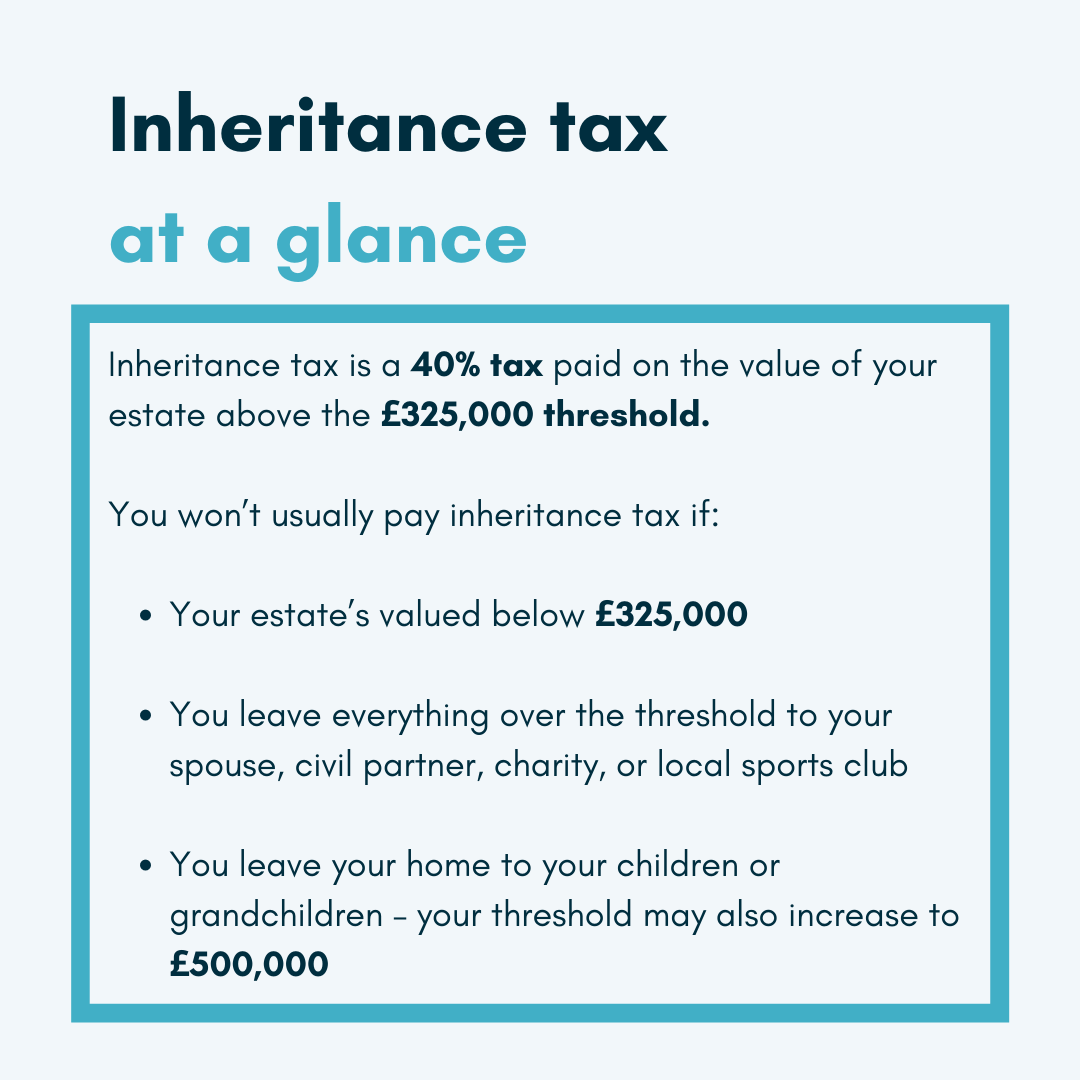
If the value of your estate, including your property, money, and possessions, is under £325,000, you will not need to worry about inheritance tax.
If it is above this threshold, you will need to plan accordingly. It is a good idea to keep this in mind when preparing to make a will.
Inheritance tax currently sits at 40% on anything above the £325,000 threshold. So, if your estate is worth £400,000, you will pay £30,000 in inheritance tax, which is 40% of the £75,000 above the threshold.
It is possible to avoid paying inheritance tax if you leave your estate to your spouse or civil partner. You may also be able to increase the £325,000 inheritance tax threshold to £500,000 if you leave your home to your children or grandchildren.
Sorting your online accounts
Most people associate wills with practical matters like money, but these days many of us also live online, through social media accounts, shopping sites, personal websites, and email.
Some sites, such as Facebook, already have a process for choosing a legacy contact who can look after your account after it has been memorialised. For others, you can specify who should protect your digital legacy. When getting ready to write your will, it is worth thinking about who you would want to access and manage these accounts after your death.
Writing your last wishes
Before making a will, think carefully about the kind of funeral you would want. Would you prefer to be cremated or buried? You do not need to set out your funeral wishes in your will, as funerals often take place before probate is completed, but it is still worth considering them in advance. Tell your loved ones what you would want and, where appropriate, include your wishes in your will.
Finding the right legal professional
Your final consideration before writing a will is choosing the right legal professional. While you can write your own will, it is generally not advisable. In the legal world, even a misplaced comma can end up causing issues, so it is usually best to seek professional help.
Solicitors and will writers can guide you through the process, making sure everything is properly prepared. However, many people are unsure how to find someone who is trusted, professional, and experienced in will writing. Searching Google or flicking through the Yellow Pages will only get you so far.
We can help you find a solicitor or will writer near you tailored to your needs.
Write your will today
Plan for your future with the help of a solicitor or will writer.
Related Articles

How Much Does Writing a Will Cost in the UK?
5 Mins Read
Read More
Writing a Will – Essential Guide to Creating Your Last Testament
10 Mins Read
Read More
Joint Wills for Couples: Mirror Wills vs Mutual Wills
7 Mins Read
Read More
What is an Executor of a Will?
12 Mins Read
Read More
What Makes a Will Invalid in the UK?
6 Mins Read
Read More
Wills & Probate – Frequently Asked Questions
13 Mins Read
Read More